


Hello and happy Monday (evening),
Is gatekeeping back in? I have been thinking about about the idea that gatekeeping in media—both as it relates to music and as it relates to the media industry writ large—is going to come back in vogue with the massive boom of AI slop content coming our way. I have lately been wondering if, with so much content coming at us from every angle, there’s going to be a premium on the content that truly feels thought through, obsessed over, and intentional. In other words, the content that really does feel truly original and deeply human. Thoughtful content is, in my opinion, already becoming something of a luxury good, something that stands to be lost in a digital sea of, well, literally everything. By thoughtful content, I mean things like the articles that are obsessively reported, the albums that are too long and out of left field, the newsletters that critique instead of just list (I guess we also list, but you know what I mean), the playlists that are really well curated instead of the ones that just feel like brain dumps. To give a concrete comparison, I think things like the listicle are going to lose where the review (whatever its new form might be) or the deep-dive will soon win again.
A few things in my orbit are telling me that this theory might just be correct. For one, see the following quote from a “friend of the letter” that was featured in Feed Me last week (can you tell I love Feed Me? Emily Sundberg please ship your new tees to Canada):
We need gatekeepers again—new, more diverse ones. Editors. Experts. Taste isn’t a democracy, nor should it be populist. It comes from experience and exposure. Just because you eat doesn’t make you a restaurant critic. I trust a critic whose perspective is shaped by history, depth, and lived expertise. It’s no different than expecting the head of the U.S. Department of Health to hold a PhD in medicine (well… ideally).
This contributor pinpoints a brewing appetite for taste. And by this I don’t just mean recommendations, but truly taste and tastemaking. I’ve seen a few takes floating around the internet theorizing that we’re exiting an age of self-directed “discovery” and entering one of earnestly seeking out the opinions of tastemakers and curators and critics again. Part of the reason this is happening, these arguments posit, is because algorithms honestly just started recommending too much and too similar, so much so that what we were able to discover for ourselves often stopped feeling distinguished, personal, and fresh. As a result, instead of really connecting with something truly new, we can slip either into recency bias or derivative echo chambers.
I’m really interested in this take and this potential shift in media consumption behaviour, especially as it pertains to music. I’ve found a lot of my most treasured discoveries through digitally-mediated platforms, like I think most of us have. It would be disingenuous of me to say I haven’t. But, I have felt that, especially lately, I’ve at times found myself caught in a rut of that content overwhelm and recency bias, with so much music coming out that it’s hard not to slip into internet inertia. This is where gatekeepers, tastemakers, and critics come in. These are the people who aren’t afraid to tell it like it is, to push our boundaries of comfortable listening, and to serve us something we might not like at first but will ultimately be better for hearing.
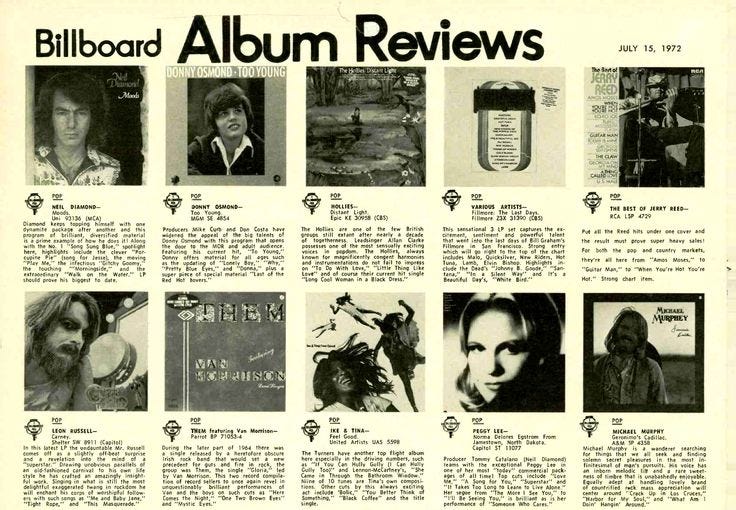
It’s good to be uncomfortable, in my opinion, when you’re finding new music. Besides, isn’t that how growth in any realm of life works, being uncomfortable? Acquired tastes often reap the dearest rewards. Pushing our own boundaries makes our aesthetic and artistic experiences more layered, meaningful, and interesting as a result. I think this is where tastemakers come in, and why people are so interested in hearing from them again after coming out of a period so driven by just finding “stuff we’ll like.” We’ve been, in my opinion, in a massive age of “recommendation” and less in an age of critique. Now, there are new possibilities opening up.
But what do these tastemakers really do? How do they compliment—or compete with or both—the algorithms that have become so omnipresent in our music discovery ecosystem? What do we stand to gain from keeping tastemakers around? Why are people seemingly looking to centre them more in their music discovery these days? To answer these questions, I asked three people who know this world best: The New Yorker’s Amanda Petrusich, Spotify’s Lizzy Szabo, and Emily White, a music tech strategist and Substack commentator.
“The streaming era solved access, but flattened context. We have access to unlimited music but hear the same songs repeatedly on streaming services and social media. Discovery without context flattens music into anonymous soundbites,” Emily told me. The dynamic she sees now playing out in the current ecosystem is that access isn’t really the thing people are itching for anymore because it is so ubiquitous. Rather, she said, taste and storytelling are the new hot commodities.
A “flattening of context” is, in my opinion, an excellent way to frame the problem with the sea of music content hitting listeners every day. Part of the excitement of developing one’s personal music taste, in my opinion, is that it feels almost primal and deeply identity-driven. Discovering the songs that light us up can be a really intimate exercise, one that, if done right, can help us figure out parts of ourselves over time. Choosing the path of least resistance in music discovery—just listening to “whatever” or letting autoplay choose—can take away those benefits. Worse still can be when there’s so much to sift through that we get stuck in analysis paralysis.
Emily explains this well, noting that: “There is an overwhelming amount of music being released. As more consumers become creators, that continues to increase. A trusted guide to cut through the noise and not just introduce you to something, but communicate why it matters is important. Fans don’t want more music—they want music that matters.”
Indeed, if there was one common thread in the comments I received on the necessity of and rising desire for tastemakers, it was that the best thing they do is push us out of our comfort zones. They don’t just feed us content, they help us process it, too.
“I don't know that this is the perfect answer, but recommending often feels like ‘if you like this, you’ll probably like that’—something algorithms do well at scale. Curation implies time, intention, and a deeper reason for bringing things together. It’s about creating an experience that reflects personality, taste, and care, even if not every choice lands with every listener,” Lizzy wrote to me, explaining what she saw as the difference between recommendation and curation, and why that distinction matters. In her day to day, her team is focused on building up the latter without totally tossing the former, a balance that can be hard to strike but rewarding when executed effectively. Mostly, it’s really about infusing that personal touch into finding new music, something she explained that algorithms—despite how powerful they currently are—can’t quite replicate just yet. “I recently saw a great TikTok from fashion commenter Chani Ra (she’s amazing) where she says her biggest green flag is seeing an outfit that doesn’t quite land, because it means rather than following the trends or formulas someone is attempting to be truly original. Even if they flop sometimes. It creates conversation—a crucial part of music enjoyment and discovery,” Lizzy explains. “A great curated experience leaves you feeling more informed, inspired, and whole—because it’s about more than quick satisfaction.”
“Algorithms are improving quickly and can be incredible for connecting you to new music, products, and ideas. Imagine where we’ll be even a year from now. But when you think about your most memorable music discoveries, they’re often tied to a memorable moment, interaction or conversation—even if online. It’s about trusting and admiring the person who shared it, just like when you find something excellent your first reaction is often to share it with someone special,” she adds.
When I asked Amanda about all of this, she pointed me to that irreplaceable personal journey tastemakers can guide us on, writing: “My own record collection was shaped, in ways both quantifiable and illusive, by the so-called tastemakers I encountered in my youth—from the bylines I obsessed over, to the clerks I tried to impress at my local record shop, to cool kids ripping endless cigs outside my high school while wearing sick Megadeth t-shirts. In retrospect, what a fucking privilege to learn from all of those people!”
“In the late 90s, I remember seeing Sonic Youth's ‘Washing Machine’ on display at Exile on Main Street, the little shop where I went to buy CDs—I picked it up mostly just to receive a fleeting nod of respect from the dude behind the counter. It was kind of a hard record to like at first—but I kept listening, eventually it clicked, and a million things broke open for me. Changed my life,” she continued. “Which I guess is simply to say—our own tastes and proclivities have limits, which is fine and great, but it's really good to push them once in a while!”
Herein lies the work of a great tastemaker, at least according to Amanda (and I’m very much inclined to agree). In her words: “A great critic can do that—get you to move beyond what's familiar or comfortable or easy, get you to put in the work.” Algorithms left alone, Amanda argued, can leave you stuck in a “dumb prison of your own creation.”
Diving into discomfort, context, and shock can often be the antidote to a media and music culture that, at times, can be dryly passé. The beauty of tastemakers, it seems, is their ability to shock us back to life when the path of least resistance might otherwise just be to float down the musical lazy river of life. What tastemakers give us on any platform or medium they exist in is an ability to see beyond ourselves and step out of our bubbles. Matty Healy once interestingly put it this way: “Your favourite album will probably be an album that you hate the first time you hear it.” This has certainly been true for me. And a lot of those joyful surprises come thanks to credible tastemakers.
Interestingly, there are ways that I see these two approaches—algorithms versus human touch—working well together. It’s entirely conceivable to me that there is a middle ground where algorithms can recommend, but tastemakers can have the final say on curating and delivering. Emily expressed a similar thought, saying on this point that: “Algorithms and human curation can work really well together. But without inputs and tuning from humans, the algorithm starts to become a snake eating its tail.”
I think Lizzy has hit on this balance well with her team and in her work. She curates some of Spotify’s biggest playlists and projects for indie talent, including Lorem and Fresh Finds, both sources from which I’ve been exposed to some of my favourite emerging artists. As a response to what she saw as listeners’ desire for more context—similar to what Emily pointed out—she started the Lorem & Friends newsletter, a place for people to see the intention behind the music she platforms every day, giving the playlist texture and meaning off-platform. Her team has also started doing things like video editors’ notes on certain playlists to guide listeners through the music they’re about to hear.
“Within Spotify’s editorial team, we’ve put a big emphasis on curating new music—curating from the moment of release, before algorithms can process it. We also package music in more nuanced ways, guided by context, emotion, and intangible connections that people intuitively understand and find interesting,” she said of these new efforts. Algorithms, she explained, are helpful in her work and even advantageous, but her goal often is to “work together and find ways to combine both to amplify our human touch.”
Emily has also reported extensively on people trying to strike this balance, highlighting professional superfans like Carly Bogdajewicz who are building platforms around their own personal connection to music and the stories that have driven their loves and discoveries. In spheres of influence like the ones people like Carly are building, tech becomes a compliment to the art of tastemaking, sharing, and storytelling through music discovery. I’d go out on a limb and argue that plenty of the music Substacks and music podcasts floating around are striking their own versions of this balance, too. In these verticals—especially fan-led channels like Carly’s—Emily explains that the tastemaker is almost the worldbuilder, and those who buy into that person’s taste are people who want to share in their aesthetic world. “Just look at the success of things like Severance, Taylor Swift, Fortnite or Romantacy books,” Emily wrote of this phenomenon. “People want to immerse themselves in a world full of lore, cultural references and layers of story.”
Ultimately, what I’m really seeing as the nexus of all of these various ideas about tastemaking is that they help create those moments like the ones Amanda highlighted, those where you’re guided (maybe even called) to put in the work to “get” whatever it is you’re listening to, but where the rewards are serendipitously surprising and the work is worth it.
If current audience appetites are any indication, these seem to be the moments people are craving. As I said at the beginning of this letter, I really do think our music discovery appetite is shifting towards depth, innovation, context, and expertise rather than sheer volume. Providing that distinction, then, is what tastemakers really are there for, and why, it seems, they’re only going to become more relevant, even while the technological tools they use get updates along the way. In an ever widening realm of content, we’re all the better for it.
In other news:
Best Fit’s Summer Forecast is this weekend. Tickets are going quickly!
Puja Patel took over at Defector last week. Under her watchful eye, some great pieces were published, including one on Brazilian Funk and another on Stud Country and queer line dancing, among many more.
Somewhat as a continuation of what we discussed today, I’ve been into Mapu’s instead of doomscrolling Substack. In each letter, we get cool new sources for thoughtful, non-brainrot media consumption. May we each, as Mapu says, find some more mindful media.
Shoutout to Amanda, who in addition to providing comment for this piece also published a sick profile of Mac DeMarco last week.
I stumbled upon a very cute Substack called Handstamp, which is a series of interviews with artists on how they think about live shows. Guests have included Christian Lee Hutson, Yasi Salek, and Chris Black.
Jon Caramanica published an interesting think-piece for NYT on the trend of artists “going long” to discuss new projects. This specifically and primarily dissects Taylor Swift’s new heights appearance, but it also pulls in Drake’s recent lengthy podcast appearance as well. Caramanica contrasts their two styles—as well as the strategy of longform casual podcast interviews ingeneral—really well.

Great read fully agree with this. That actually motivated me to pull together some of the my favourite curators/lists of the year here: https://titleca.se/
A column on tastemakers and then you interview someone from Spotify who are causing this numbness. 😅